Skip to content
Condensation Information
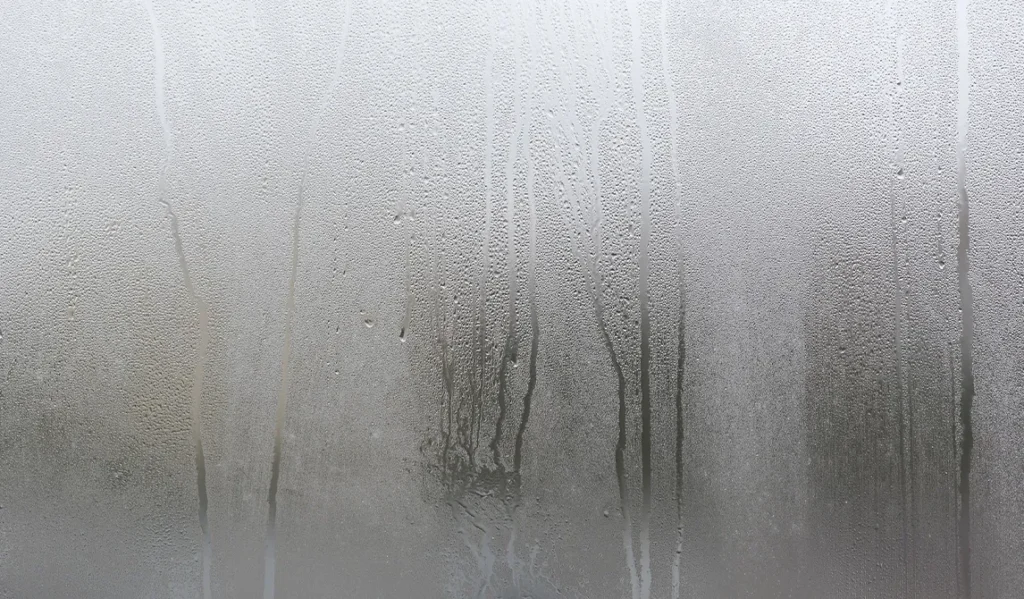
Condensation is a common concern for homeowners, and it often leads to confusion. That’s why we’ve created this FAQ page—to give you clear, simple answers. From why it happens to what it means for your windows, we’ll break down what’s normal, what’s not, and how to fix it.
Browse the FAQs below to learn more and see how First Choice Windows can help keep your home clear, efficient, and comfortable.
Condensation occurs when the temperature of the surface is colder than the Dew Point temperature. Air acts like a sponge, holding tiny water droplets called water vapor. While you can’t see water vapor with the naked eye, when those tiny droplets make contact with a cool surface like your windows, a natural process called condensation transforms the water vapor from an airborne, gaseous state into liquid.
You may have witnessed this phenomenon before: perhaps when you take a cold soda out of the fridge and notice condensation dripping from the can, or when your glasses fog up as you step outside from an air-conditioned space into hot, or humid weather. Bathrooms, especially after long, hot showers, often serve as prime locations for condensation to accumulate.
When it’s hot outside, windows can experience a phenomenon commonly referred to as “summer condensation.” This occurs due to the interaction between outdoor temperatures and humidity levels.
When the sun beats down on your windows, the glass can heat up considerably, especially if your windows are equipped with Low-E (low-emissivity) glass, which is designed to reflect heat. This in turn, causes the condensation to go away throughout the day as the glass is no longer below the dew point temperature and the condensation dries up.
As the day transitions into night and temperatures drop, the glass begins to cool. This cooling effect, combined with the cooler air inside your home, creates the perfect conditions for condensation to form on the outer surface of the glass. Essentially, the warm, moist air outside meets the cooler surface of the window, leading to the accumulation of water droplets, or “sweat,” on the exterior glass.
While you might assume that foggy windows indicate a need for repairs or replacements, that’s not typically the case.
In fact, when it comes to condensation inside your home, wet, foggy windows generally indicate that the indoor humidity levels are very high. According to the United States Environmental Protection Agency, when outdoor temperatures reach 20 degrees Celsius (68 degrees Fahrenheit) or higher, indoor humidity levels should be around 35%. If humidity levels rise above this threshold, you risk creating a cozy environment for mold and moisture damage, which can adversely affect your walls, floors, and even electrical systems.
Although older, drafty aluminum windows may not be the best choice for energy efficiency—and can increase your heating and cooling costs—they do have one advantage: they allow excess moisture to escape from your home. Think of them like your bathroom fan, efficiently whisking away humid air after a hot shower. However, this also allows your heating and air conditioning to escape, preventing your house from heating and cooling properly.
Condensation, or fogging, that appears in between the panes (not on the inside or outside pane of glass) of a double-pane window, usually won’t clear up, even if you reduce the humidity levels inside your home. This type of condensation often indicates seal failure, which means that the gas between the panes has leaked out through a tiny hole or crack in the glass seal. This means that it is time to replace your sash, glass unit, or maybe even full window, especially if your windows are old.
If the condensation disappears as the day progresses, this is normal and not between the panes—even if it takes several hours to clear. However, If the window stays foggy 24/7, never goes away and cannot be wiped inside or outside depending on which side the condensation is on, then that means the condensation is trapped between the panes of glass.
Believe it or not, condensation from outside heat isn’t actually a bad thing compared to winter condensation. During colder months, especially early in the morning, the exterior air is often colder than the air inside your home. When outdoor air contacts the glass, the water vapor in the air liquefies. As temperatures drop further, this moisture can freeze, creating frost on your windows. This is because window condensation that happens indoors can actually encourage mold growth around your home, which in turn, can compromise your family’s health. However, summer condensation is purely a “visual issue” as it only occurs outside your windows and home, unless your inside humidity levels are too high.
If your windows form condensation during the summer or throughout the year in humid climates like Florida, there’s no need for alarm. In fact, it indicates that the window weatherstripping, insulation, and vapor barriers are doing their job, maintaining energy efficiency.
While window condensation does not typically cause harm, it can be an eyesore for some homeowners. If foggy windows bother you, some strategies can help reduce the issue:
Things that could help include lowering your thermostat or investing in a dehumidifier. If you turn on a dehumidifier, it will help release less moisture into the air, which could reduce moisture levels and condensation on your windows. To control condensation on your windows, you need to reduce your indoor humidity. Installing a dehumidifier, cleaning out your attic vents, and using your kitchen and bathroom exhaust fans can go a long way toward controlling indoor moisture levels. You might also want to consider adding insulation inside your attic.
Some things that you can do to help with exterior condensation, would be to trim bushes and any vegetation that may be blocking airflow. This can help improve air circulation and sun exposure on your windows, reducing the likelihood of condensation. Additionally, ensure your gutters and downspouts are clear to prevent excess moisture near your home’s foundation. You may also use products like Rain-X on your windows’ exterior to encourage water droplets to bead up and roll off the surface rather than clinging to the glass.
In conclusion, while foggy windows can be a concern for some homeowners, they typically do not indicate any underlying issues with your windows. By understanding the causes of condensation and knowing how to address them, you can help maintain both the aesthetic appeal and functional integrity of your home’s windows.